
Plain-Language Overview
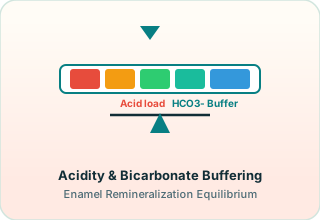
Every time you consume food or beverages containing fermentable carbohydrates or acids, bacteria in your dental plaque produce lactic acid, causing the oral pH to drop. Healthy saliva possesses a natural chemical defense system known as buffering capacity, primarily driven by bicarbonate ions ($HCO_3^-$), which rapidly neutralizes this acidity and returns the mouth to a neutral pH.
When salivary pH stays below approximately 5.5 (the critical pH threshold for dental enamel), minerals such as calcium and phosphate begin leaching out of the teeth—a process known as demineralization. If buffering is sluggish or deficient, teeth remain in this acid vulnerability zone for prolonged periods, greatly accelerating cavity formation and enamel erosion.
What This Category Measures
Salivary acidity and buffering tests assess two interconnected chemical parameters:
- Resting Saliva pH: The baseline acidity of unprovoked oral fluid. Normal resting saliva is slightly acidic to neutral, typically ranging from pH 6.7 to 7.3. A chronically low resting pH (below 6.0) indicates persistent acid challenges.
- Bicarbonate Buffering Capacity: Measures how effectively a measured sample of saliva can neutralize an added standardized acid load. This is evaluated using colorimetric test strips containing reactive chemical pads that change color according to buffering strength (categorized as low, moderate, or high buffering).
Why a Dentist May Discuss pH & Buffering
Your dental provider may discuss buffering evaluation under various clinical circumstances:
- High Caries Risk Assessment (CAMBRA): Patients who brush regularly but still develop recurrent interproximal or cervical cavities often have impaired acid neutralization.
- Dietary Acid Exposure & Lifestyle Habits: High consumption of sparkling water, sports drinks, citrus fruits, kombucha, or frequent snacking keeps the mouth in an acid cycle.
- Gastroesophageal Reflux Disease (GERD) or Bulimia: Stomach acid has a pH of 1.5 to 2.0. When gastric acids reach the oral cavity, strong salivary buffering is vital to protect against palatal enamel erosion.
- Evaluation of Remineralization Therapy: Tracking buffering status before and after prescribing alkaline oral rinses or calcium phosphate remineralization treatments.
What Collection or Assessment Involves
pH and buffering tests are quick chairside evaluations yielding results within 5 minutes:
- Sample Placement: Saliva is collected from the resting pool under the tongue using a disposable pipette or by expressing stimulated saliva into a small measuring cup.
- pH Strip Reading: A narrow pH test strip is touched to the saliva for 10 seconds. The resulting color is compared against a calibrated visual chart.
- Acid-Titration Buffering Strip: Standardized drops of saliva are dispensed onto test pads pre-impregnated with acid. After 2 minutes, the color change indicates how effectively the bicarbonate ions neutralized the reagent acid.
Important Clinical Limitations
Tooth decay is a multifactorial disease that requires three coexisting elements: susceptible enamel, cariogenic plaque bacteria, and fermentable carbohydrates over time. Having low buffering capacity simply means your teeth are more vulnerable when acid attacks occur—it does not mean cavities are currently present. Conversely, someone with excellent buffering capacity can still develop decay if plaque biofilms remain undisturbed along the gumline.
Questions to Ask Your Dentist
- “Is my resting saliva pH within the safe neutral range above 6.5?”
- “Does my saliva possess adequate buffering capacity to protect against dietary acids?”
- “Would an alkaline baking-soda rinse or remineralizing calcium phosphate paste be helpful for me?”
- “How does my buffering result compare with my physical tooth wear or enamel erosion?”
Authoritative Sources & Literature
- American Dental Association (ADA) Science & Research Institute. Salivary Diagnostics Oral Health Topics (Updated Oct 2023). ADA.org.
- Featherstone JD. The continuum of dental caries—evidence for a dynamic disease process. J Dent Res. 2004;83 Spec No C:C39-42.
- Bardow A, et al. Relationships between salivary factors, evaluation of the critical pH for enamel, and active dental caries. Arch Oral Biol. 2001;46(8):713-727.